
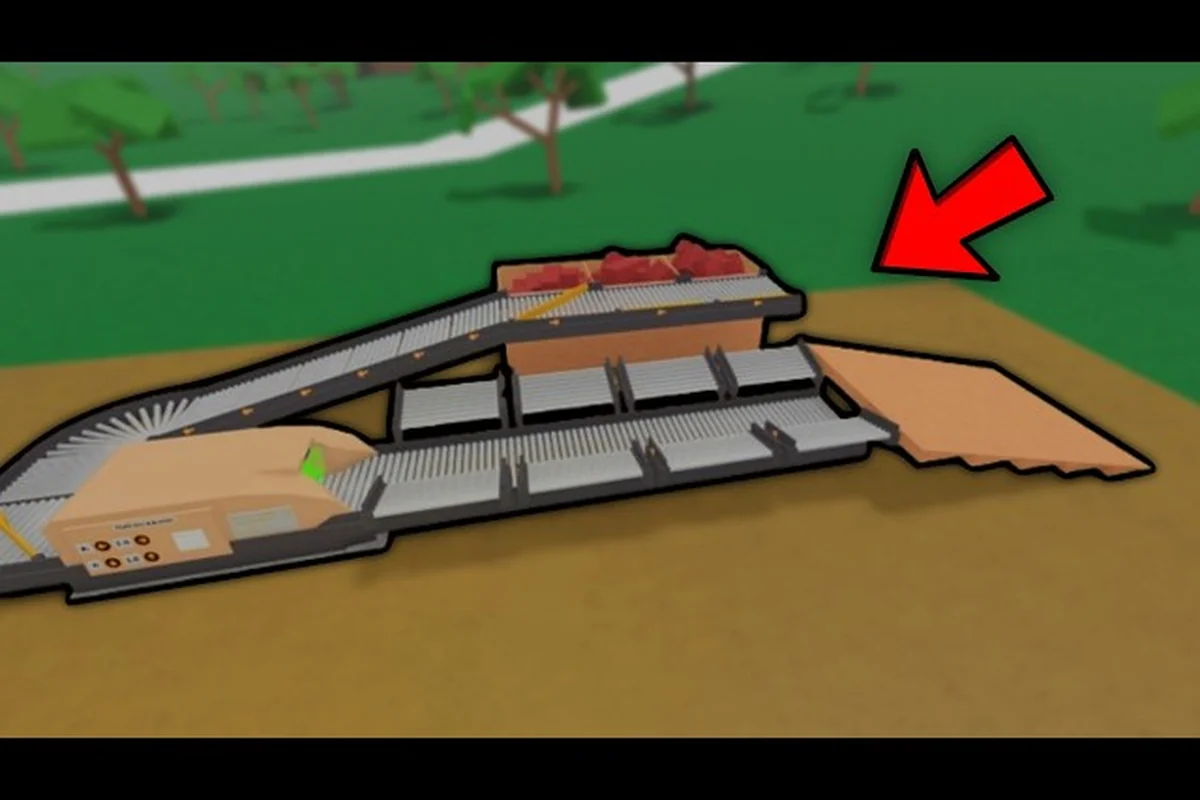
Building a reliable money-making operation in Lumber Tycoon 2 requires more than just chopping random trees. The difference between a struggling player and one pushing toward a million Lumberbucks comes down to how well you design your farm layout, which sawmill you invest in, and which wood types you prioritize. This guide breaks down the exact setup that maximizes profit per hour while minimizing wasted trips and processing time.
According to the Fair Sawmill page on the Lumber Tycoon 2 Wiki, this location’s mechanics and payout data are frequently referenced when comparing the most efficient farming routes.
Why Farm Layout Determines Your Profit Ceiling
Your base layout is the single most overlooked factor in any Lumber Tycoon 2 profit guide. A poorly organized plot forces you to walk extra steps for every log, and those steps add up to thousands of lost Lumberbucks over a farming session. The core principle is simple: minimize travel distance between your tree spawn points, your sawmill, and the Wood Dropoff.
The most efficient farms place the sawmill as close to the dropoff as physically possible. When you process a log into planks, you want to turn around and sell within seconds, not sprint across your entire plot. Players who optimize this loop report cutting their per-load cycle time by nearly half compared to default layouts.
Consider the following comparison of common layout approaches: a scattered default plot forces you to zigzag between the Volcano or Tropics biome tree spawns, the sawmill, and the Wood Dropoff, inflating each load cycle to 90–120 seconds. A centralized processing hub, by contrast, compresses that same route into a compact triangle where your character barely leaves sprint range of any station. This is why the table below shows the hub cutting cycle time to 30–40 seconds — the profit difference is not from better axes or rarer wood, but purely from eliminating redundant walking distance between the sawmill and the dropoff.
| Layout Style | Average Cycle Time | Profit Per Hour | Difficulty |
|---|---|---|---|
| Scattered Default | 90-120 seconds | Low | Beginner |
| Sawmill Near Dropoff | 45-60 seconds | Medium | Easy |
| Centralized Processing Hub | 30-40 seconds | High | Intermediate |
| Multi-Sawmill Array | 25-35 seconds | Very High | Advanced |
A centralized processing hub means placing your sawmill in the middle of your plot with clear walking paths to both your tree storage area and the dropoff. You do not need a massive base, just a clean triangle between harvest point, mill, and sell point. Community testing consistently shows that the centralized approach outperforms larger, spread-out bases because walking distance is the true bottleneck.
Sawmill Tiers Matched to Your Budget
Sawmill selection directly controls how much money you can extract from each log. The Fair Sawmill, available from Wood R Us, serves as the entry point for serious farming because it supports a maximum plank cross section of X2.4 by Y1.6. That means you can process logs up to 1.6 units in thickness, which opens up profitability for mid-tier wood types that smaller sawmills cannot handle.
Your sawmill progression should follow a clear path. Start with whatever basic mill you can afford, then upgrade as soon as your cash flow allows. The jump from a basic sawmill to the Fair Sawmill is often the single largest profit increase a new farmer can make because it unlocks thicker logs and reduces waste on irregular cuts.
Here is a practical sawmill upgrade priority table based on community data, but understanding why each step matters will save you from wasting Lumberbucks on a mill you cannot yet feed. The Fair Sawmill's X2.4 by Y1.6 plank capacity is the first real bottleneck breaker because it accepts logs up to 1.6 units thick, which is exactly the maximum cut size for mid-tier species like Spook Wood and Sinister Wood that dominate the early-to-mid farming meta. Community testing consistently shows that players who rush the Fair Sawmill before investing in a larger axe or a better truck route earn roughly 40% more per haul, since they stop discarding oversized logs that the Basic Sawmill's X1.2 by Y0.8 capacity would reject outright. The Advanced Sawmill's X3.0+ capacity only pays for itself once you can reliably source premium wood like Frost Wood or Cavecrawler Wood, which spawn far from the default Wood R Us plot and require a long-haul transport setup first. In short, the table below is not just a shopping list — it is a sequence of unlock conditions: each tier becomes profitable only after your axe, vehicle, and route infrastructure can supply logs that actually use its larger plank cross section.
| Sawmill Tier | Cost Range | Plank Capacity | Best Used For |
|---|---|---|---|
| Basic Sawmill | Low | X1.2, Y0.8 | Starter wood only |
| Fair Sawmill | Mid | X2.4, Y1.6 | Mid-tier wood, bulk farming |
| Advanced Sawmill | High | X3.0+ | Premium and rare wood |
| Specialty Mills | Very High | Variable | Event wood, max profit |
Do not rush to buy the most expensive sawmill before you have a steady income stream. The Fair Sawmill hits the sweet spot for most players because it processes the wood types you will actually farm during your push to one million Lumberbucks. Once you have a comfortable buffer, reinvesting in a larger mill makes sense for premium wood.
Best Trees to Farm for Consistent Income
Not all trees are created equal when you are building the lumber tycoon 2 best money farm. The ideal farming tree has a short growth time, moderate hardness, and a solid plank value. Frost Wood stands out as one of the strongest early-to-mid game options because it grows in only 6 minutes at Taiga Peak, letting you run tight harvest loops without waiting around.
Gold Wood offers higher value per log but demands a 25-minute growth cycle, which makes it better suited for a secondary harvest rotation rather than your primary income source. Blue Spruce, with its 22-minute average growth time and hardness of 12, occupies a similar niche as a supplement rather than a mainstay.
The following table compares the most relevant farming trees for a profit-focused setup, using three metrics that directly shape your Lumberbucks per hour: growth time, hardness, and the role each tree fills inside a rotation. Hardness matters because it controls how many axe swings each log requires, so a tree with a 10 hardness like Frost Wood clears noticeably faster than Blue Spruce at 12, even before you factor in the 16-minute gap between their growth timers. Zombie Wood is included as a situational Swamp rotation pick because its variable growth window can occasionally line up with your Frost Wood loop, but it should never anchor a money farm due to that unpredictability.
| Wood Type | Growth Time | Hardness | Best Role |
|---|---|---|---|
| Frost Wood | 6 minutes | 10 | Primary fast loop |
| Gold Wood | 25 minutes | 11 | Secondary high-value |
| Blue Spruce | 22 minutes | 12 | Seasonal supplement |
| Zombie Wood | Varies | Medium | Swamp rotation |
A smart rotation pairs a fast-growing tree like Frost Wood with a slower, higher-value option like Gold Wood. While your Frost Wood respawns, you harvest the Gold Wood, then return to the fast loop. This keeps your sawmill running constantly instead of waiting on growth timers. For a deeper breakdown of which woods generate the most Lumberbucks per hour, the best wood for money guide covers tier rankings and rare spawn locations in detail.
Building a Million-Lumberbuck Strategy
Reaching one million Lumberbucks is a milestone that separates casual players from dedicated farmers. The fastest route combines a tight layout, a capable sawmill, and disciplined wood selection. If you are wondering how to get 1 million in Lumber Tycoon 2, the answer is not a single trick but a compounding system where every cycle shaves seconds and every log maximizes plank value.
Start by setting a daily or session-based target. A realistic intermediate player running a centralized Frost Wood loop can generate several hundred thousand Lumberbucks in a focused session. The key is consistency: a 45-second cycle repeated 80 times per hour produces far more than sporadic bursts of high-value wood with long gaps in between.
Use this step-by-step progression to structure your climb: each phase deliberately gates your access to better trees behind infrastructure upgrades, so the order matters more than raw playtime. For example, a player who rushes Frost Wood before affording the Fair Sawmill will spend more time hauling logs across the map than actually cutting, because the basic sawmill’s slower plank conversion cannot keep pace with Taiga Peak’s respawn timers. Conversely, grinding starter wood past 50k without upgrading wastes cycles on low-value Oak and Birch when a Fair Sawmill would already multiply your per-log output. The progression below is calibrated so that every reinvestment — a better sawmill, a second sawmill, a shorter path — pays for itself within roughly one session, keeping your Lumberbucks-per-hour curve climbing instead of plateauing.
-
Phase 1 (0-50k): Set up a basic centralized layout and grind starter wood to afford the Fair Sawmill.
-
Phase 2 (50k-250k): Unlock Taiga Peak access and switch to Frost Wood as your primary loop.
-
Phase 3 (250k-750k): Add Gold Wood as a secondary rotation and reinvest in a larger sawmill.
-
Phase 4 (750k-1M): Optimize your paths, consider a second sawmill, and push the final stretch with premium wood.
Each phase builds on the previous one, and skipping ahead usually backfires because you lack the infrastructure to support higher-tier wood. The how to make money fast guide breaks down additional acceleration tactics for players who want to compress this timeline.
Optimizing Your Farming Loop for Speed
Speed is the hidden multiplier in any Lumber Tycoon 2 farming guide. Every second spent walking, repositioning, or waiting for a sawmill to finish is a second you are not earning. The most profitable players treat their farm like a production line where each step flows directly into the next.
One underrated optimization is pre-staging logs. Instead of carrying one log at a time from tree to sawmill, drop multiple logs near your mill in a staging pile. When you have three or four logs ready, process them back-to-back, then make a single trip to the dropoff with all the planks. This cuts your walking time dramatically compared to the one-log-at-a-time approach.
Another critical factor is axe selection. A faster axe reduces the time you spend chopping each tree, which compounds across dozens of harvests. The right tool for your current wood tier can shave 10-20% off your total cycle time. For a full breakdown of axe progression and which tools are worth your Lumberbucks, the best axe guide explains the upgrade path from starter tools to endgame options.
Consider this timing comparison for an optimized versus unoptimized loop: the numbers below assume a Volcano-side base with a Sawmax 02 already placed near your tree cluster, which is the single highest-impact setup decision for any lumber tycoon 2 best farm route. Without that placement, the "Walk to Tree" and "Carry to Sawmill" rows balloon by 5-8 seconds each because your character must cross the bridge or navigate the rocky terrain around the Volcano every single cycle. Players who instead keep their mill at the default Wood R Us lot often lose 15-20 seconds per loop just on transit, which erases any profit advantage from chopping higher-value wood like Frost Wood or Spook Wood. The table below isolates each step so you can see exactly where the 38% total savings comes from.
| Loop Step | Unoptimized Time | Optimized Time | Savings |
|---|---|---|---|
| Walk to Tree | 10 seconds | 5 seconds | 50% |
| Chop Tree | 15 seconds | 10 seconds | 33% |
| Carry to Sawmill | 12 seconds | 6 seconds | 50% |
| Process Planks | 8 seconds | 8 seconds | 0% |
| Sell at Dropoff | 10 seconds | 5 seconds | 50% |
| Total Cycle | 55 seconds | 34 seconds | 38% |
A 38% cycle time reduction translates directly into 38% more profit per hour with zero additional wood value. That is why layout and movement optimization matter as much as wood selection. To put that in concrete terms: if a Lava Wood plank sells for $55 at the Wood R Us dropoff, a 55-second loop yields roughly $60 per minute, while the optimized 34-second loop pushes that to nearly $97 per minute — a difference of over $2,200 per hour from the same tree cluster. The compounding effect is even more dramatic when you factor in Sawmax 02 processing queues: faster loops mean the sawmill never sits idle, so every second of its 8-second plank cycle is spent converting logs instead of waiting for you to return from the Volcano. Players chasing the lumber tycoon 2 best money farm benchmark of 1 million Lumberbucks should treat these 21 saved seconds per loop as their most reliable income upgrade, since no axe or wood tier can match a 38% throughput gain that costs nothing to implement.
Avoiding Common Farming Mistakes
Even experienced players fall into traps that silently drain their profit potential. The most common mistake is overinvesting in sawmills before securing a reliable wood supply. A top-tier sawmill processing starter wood is still limited by the value of the logs you feed it, so your bottleneck shifts to harvesting rather than processing.
Another frequent error is ignoring growth timers. Players who harvest a tree the moment it respawns and then stand around waiting for the next spawn waste valuable minutes. Instead, build a rotation with two or three tree clusters so you always have something ready to cut. The beginner money-making guide covers foundational habits that prevent these early mistakes from becoming permanent patterns.
The third major mistake is selling raw logs instead of planks. Planks almost always sell for more than the equivalent raw log because the sawmill adds value through processing. Skipping the sawmill to save time actually costs you money on every single load, which defeats the purpose of building a farm in the first place.
Frequently Asked Questions
What is the fastest way to make money in Lumber Tycoon 2?
The fastest consistent method is a centralized Frost Wood loop with a Fair Sawmill or better. Frost Wood respawns every 6 minutes, letting you run tight harvest cycles without long waits. Pair it with Gold Wood as a secondary rotation to keep your sawmill running during Frost Wood downtime.
How much does the Fair Sawmill cost?
The Fair Sawmill is available at Wood R Us for a mid-tier price that most players can afford after a few focused farming sessions. It supports plank cross sections up to X2.4 by Y1.6, which unlocks profitable processing for mid-tier wood types that basic sawmills cannot handle.
Which trees should I farm for maximum profit?
Frost Wood is the best primary tree because of its 6-minute growth time and solid plank value. Gold Wood serves as a strong secondary option despite its 25-minute growth cycle. Blue Spruce works as a seasonal supplement during winter events when it spawns more frequently.
Do I need multiple sawmills to reach one million Lumberbucks?
No, a single well-placed Fair Sawmill is sufficient for the entire climb to one million Lumberbucks. A second sawmill only becomes worthwhile once you are processing high volumes of premium wood and your primary mill becomes the bottleneck in your production line.
Is it better to sell logs or planks?
Always sell planks. The sawmill adds significant value to every log you process, and skipping that step means leaving money on the table with every load. Even a basic sawmill increases your profit per tree compared to selling raw logs directly at the dropoff.